
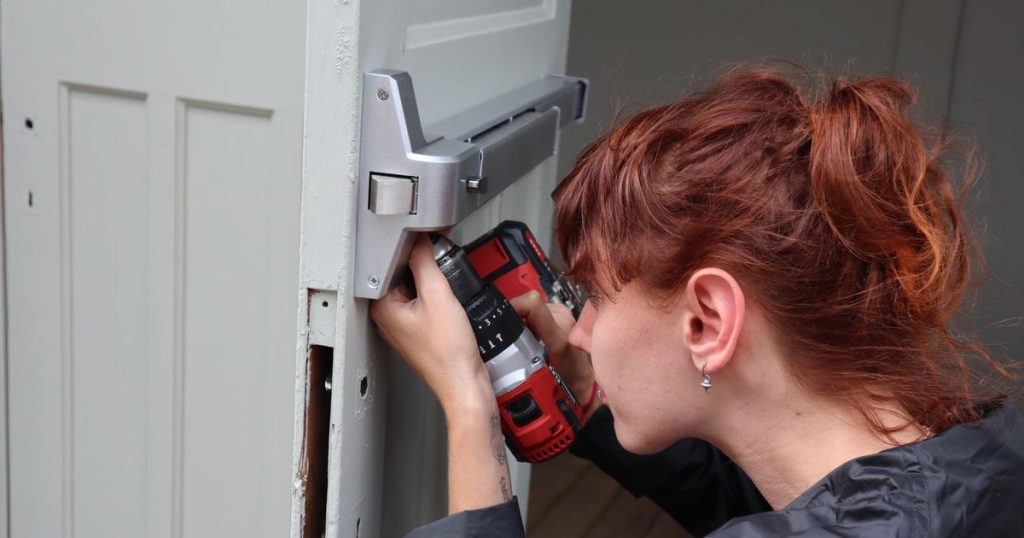
“Handyman” is a job title with no fixed definition, which is exactly why homeowners find it confusing. One handyman will hang your ceiling fan and another will tell you to call an electrician. Both may be right.
This guide sets out what a handyman in the Phoenix area can do, what Arizona law says they cannot do without a contractor’s license, and the gray area in between where the answer depends on the size of the job. It is written for homeowners deciding who to call, not for people deciding what to charge.
Key Takeaways
- A handyman handles small repairs and installs: drywall patches, painting, doors, fixtures, furniture, fences, and the long list of things that are broken but not dangerous.
- In Arizona, an unlicensed handyman may only take jobs under $1,000 total, including materials, that are minor and need no building permit (A.R.S. 32-1121).
- Anything that adds wiring or moves plumbing, or that needs a City of Phoenix permit, belongs to a licensed contractor.
- The same task can be a handyman job or a contractor job depending on scope: patching drywall is handyman work, replacing a whole sheet needs a permit.
- Among the 212 companies in this directory, “Handyman” is the most common category, but 22 also list electrical work and 19 list plumbing, so many do both.
What a handyman does
A handyman does the repairs and small projects that do not need a specialist trade. In practice that means the jobs that pile up on a homeowner’s list because no single one is worth a contractor’s service call.
The common ones, drawn from the categories the companies in this directory list for themselves:
- Drywall and paint. Patching holes, fixing nail pops, texturing to match, and interior painting of rooms and trim. Drywall repair is one of the busiest categories in the directory.
- Doors, windows, and hardware. Adjusting doors that stick, replacing locks and handles, weatherstripping, re-hanging closet doors, fixing screens.
- Fixtures. Swapping a faucet or a toilet for a new one in the same place. Light fixtures and fans are the gray area covered below.
- Carpentry. Trim, baseboards, shelving, a gate that drags, a loose stair rail, deck board replacement. See carpentry and woodworking.
- Assembly and mounting. Furniture, televisions, curtain rods, grab bars, shelving systems.
- Exterior upkeep. Fence repair, pressure washing, gutter cleaning, caulking, minor stucco patches.
- Small plumbing fixes. Clearing a slow drain, stopping a leak at a valve, replacing a garbage disposal.
- Punch lists. The last ten items a contractor left undone, or the list a home inspector produced before a sale.
If it is small, it is broken, and it is not wired into the house or buried in a wall, a handyman is almost certainly the right call.
What a handyman can’t do in Arizona
Arizona draws the line by contract price, permit, and the nature of the work, not by trade. Under A.R.S. 32-1121(A)(14), a person without a contractor’s license may only perform work where the total contract price, including labor, materials, and all other items, is less than $1,000, and only if the work is of a casual or minor nature and does not require a local building permit (A.R.S. 32-1121).
Three things follow from that.
Any job of $1,000 or more is contractor work. That includes materials, so a $600 labor job with a $500 vanity is over the line. Splitting one project into several smaller contracts to stay under it is expressly prohibited by the same statute.
Any job that needs a permit is contractor work, at any price. The City of Phoenix publishes the list of work that is exempt from a permit, and by implication everything else needs one (Work Exempt from Permit, TRT/DOC/00618, City of Phoenix Planning and Development). Some of the surprises on that list are covered below.
Work that is not “casual or minor” is contractor work. The statute does not define the phrase, but a kitchen remodel is not casual whatever it costs.
Contracting without a license is a class 1 misdemeanor in Arizona (A.R.S. 32-1164), and the homeowner loses something too: the state’s Residential Contractors’ Recovery Fund, which can reimburse homeowners for bad work, only covers work by an appropriately licensed contractor (A.R.S. 32-1132). The guide to whether a handyman needs a license in Arizona covers how to check a license in two minutes.
The gray area: same task, different answer
The confusing part is that many tasks are handyman work at one scope and contractor work at another. Phoenix’s permit exemption list is where the line actually sits. The table follows the City of Phoenix list; the $1,000 limit is the same everywhere in Arizona, but Mesa, Chandler, Scottsdale, Glendale, and the other Valley cities publish their own permit exemptions, so check yours if you live outside Phoenix.
| Task | Handyman work (no permit) | Contractor work (permit needed) |
|---|---|---|
| Drywall | Patching a hole in a sheet | Removing and replacing a whole sheet |
| Light fixtures | Replacing a lamp or ballast inside an existing fixture | Replacing the whole fixture with a new one |
| Switches and outlets | Like-for-like replacement of a switch or receptacle rated 60 amps or less | Adding a new outlet, running new wire |
| Toilets and faucets | Replacing in the same location | Relocating any pipe, valve, or fixture |
| Leaks | Stopping a leak in an exposed pipe or fixture | Replacing a concealed pipe |
| Water heater | Nothing without a license | Replacement, by a licensed contractor only |
| Fences | Fences 3 feet or under | Anything taller |
| Sheds | Detached sheds up to 200 square feet with no utilities | Larger, or with power or water |
| Appliances | Anything that plugs into an existing outlet | Anything hard-wired or needing new piping |
Source: City of Phoenix, Work Exempt from Permit, TRT/DOC/00618, sections 105.2.1 through 105.2.4.
Two of those rows trip up homeowners most often. The first is light fixtures: Phoenix’s code commentary says replacing a lamp or ballast inside an existing fixture is exempt, but “the replacement of an existing luminaire with a new luminaire does require a permit.” A luminaire is the code’s word for the whole light fitting. Plenty of handymen swap fixtures anyway, and plenty of homeowners ask them to, but the letter of the code is clear, and this guide follows the code. The second is the water heater. Phoenix exempts replacement of a water heater from a permit only when a licensed contractor does it, so a handyman cannot do it at all.
Can a handyman do electrical work?
A handyman can do the electrical work that does not touch the house’s wiring: replacing a switch or outlet like-for-like, plugging in and setting up appliances, and replacing a lamp or ballast inside an existing fixture.
A handyman cannot add a circuit, run new wire, replace a panel, or, under Phoenix’s code, replace a fixture or fan with a new one, even on an existing box. Those need an electrical permit in Phoenix (Work Exempt from Permit, section 105.2.2), and a permit means a licensed contractor.
In this directory, 22 companies list electrical services alongside handyman work, and some of those hold a contractor’s license. If your job is on the contractor side of the table above, filter to that category and ask about the license before you book.
Can a handyman do plumbing?
Yes, for repairs that do not move anything. Phoenix’s plumbing exemptions cover stopping leaks in exposed pipes, clearing stoppages, repairing leaks in valves and fixtures, and replacing a toilet, valve, or fixture with a new one in the same place (Work Exempt from Permit, section 105.2.4).
The moment a pipe, valve, or fixture is relocated, or a concealed pipe has to be replaced, a permit is required and the job moves to a licensed plumber. Water heater replacement is contractor-only regardless.
The plumbing services category lists 19 companies that take plumbing calls, from handymen who will swap a faucet to licensed plumbers who will move one.
How to tell which one you need
Ask four questions about the job, in order.
- Will it cost $1,000 or more, including materials? If yes, you need a licensed contractor.
- Does it add, extend, or move wiring or plumbing? If yes, it needs a permit, so you need a licensed contractor.
- Does it change the structure, or replace a whole drywall sheet, light fixture, or fan rather than patch or swap in place? If yes, it needs a permit, so you need a licensed contractor.
- Is it a repair or a swap in the same place, under $1,000? That is handyman work.
If you get to question four, a handyman is the cheaper and faster choice, and the Phoenix handyman cost guide will tell you what to expect to pay. If you stopped at one, two, or three, the handyman versus contractor guide explains what changes when a license is involved.
What the companies in this directory actually do
The directory holds 212 published companies across the Phoenix metro as of September 2026. Every one is tagged with the services it lists for itself, and the spread says something about the trade.
“Handyman Services” is by far the most common tag, but it rarely stands alone. Electrical services (22 companies), plumbing (19), drywall repair (18), exterior painting (17), and remodeling (15) each appear on more than a dozen companies. The typical Phoenix handyman business is a small firm that does general repairs and has one or two specialties it is known for.
That matters when you are choosing. For a mixed list, any handyman will do. For a job that leans one way, pick a company whose tags lean the same way. A firm that lists drywall repair and interior painting will match a texture better than one that mostly assembles furniture.
Frequently asked questions
What is the difference between a handyman and a contractor?
A contractor holds a license from the Arizona Registrar of Contractors (ROC), is bonded, and can take jobs of any size and jobs that need permits. A handyman is not licensed and is limited by state law to minor work under $1,000 that needs no permit. The handyman versus contractor comparison goes further into cost, insurance, and when each is the better choice.
Can a handyman paint a house in Phoenix?
Yes. Painting and papering are exempt from permits in Phoenix, so the only limit is the $1,000 contract line. Painting a room or two is handyman work. If the quote for a whole-house exterior reaches $1,000 including paint, and for most houses it will, the job needs a licensed painting contractor.
Can a handyman install a ceiling fan?
Not under Phoenix’s code as written. A fan is a luminaire in the code’s terms, and replacing an existing fixture with a new one requires an electrical permit, which means a licensed contractor. Handymen do hang fans on an existing fan-rated box, a ceiling box built to carry a fan’s weight, and the risk of that unpermitted work sits with the homeowner. Installing a fan where there was no fixture is new wiring and is contractor work at any price.
Can a handyman replace a water heater?
Not in Phoenix. The city’s permit exemption for water heater replacement applies only when the work is done by a licensed contractor, so this is a job for a licensed plumber. See water heater services.
Does a handyman need to be insured?
Arizona’s licensing statute sets no insurance requirement for work inside the handyman exemption, but you should ask anyway. Request a certificate of general liability insurance before anyone works on your home. A licensed contractor must post a bond (A.R.S. 32-1152) and can be checked at the Arizona ROC contractor search.
The bottom line
A handyman can handle most of what goes wrong in a house: patches, paint, doors, fixtures swapped in place, assembly, fences, and small plumbing fixes. Arizona reserves anything over $1,000, anything that needs a permit, and anything that adds or moves wiring or plumbing for licensed contractors. When the job is small and stays in place, a handyman is the right call, and the Phoenix handyman directory lists more than 200 of them by city and by trade.