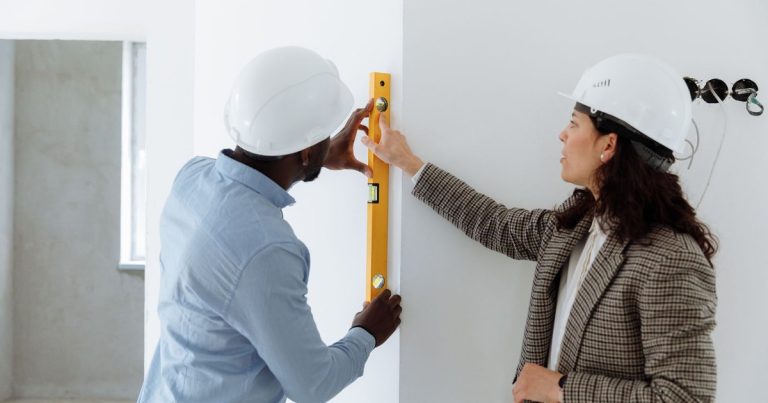

If you have never hired a handyman before, the first quote can be a shock. A two-hour visit to hang a ceiling fan and fix a sticking door comes back at $250, and you wonder whether that is normal or whether you are being taken for a ride.
It is normal. This guide walks through what handymen in the Phoenix area charge per hour in 2026, why the number is higher than the wage the person doing the work earns, what a “minimum charge” actually buys you, and how to compare two quotes that are priced in different ways. The figures come from two widely cited national price trackers, both updated in 2026, and from a Phoenix operator that publishes its own rates.
Key Takeaways
- Expect $60 to $125 an hour for a professional handyman in 2026, plus materials (HomeAdvisor, updated June 2026).
- Most visits cost $165 to $615 in total, and the national average job is $390 (HomeAdvisor, 2026).
- Most hourly handymen charge a minimum, typically one or two hours of labor, so a ten-minute fix still costs the minimum (Thumbtack).
- A flat quote and an hourly quote are not comparable until you know the estimated hours and who buys the materials.
- Any job of $1,000 or more including materials needs a licensed contractor in Arizona, which changes the price and the paperwork.
What handymen charge per hour in 2026
Handymen charge between $60 and $125 an hour in 2026, and the typical project ends up between $165 and $615 once the hours add up (HomeAdvisor, updated June 17, 2026). HomeAdvisor’s national average for a handyman job is $390.
Thumbtack, which prices from the quotes its own contractors send to homeowners, lands in the same band. Its national average is $60 to $75 an hour, with the low end at $45 to $50 and the high end at $100 to $125 (Thumbtack, updated January 2026).
Phoenix sits inside that band rather than above it. Handyman Connection’s Phoenix office, a franchise operator, publishes its own local range of $65 to $125 an hour, with a minimum service fee (Handyman Connection of Phoenix, February 2026). That is a single company’s price sheet, not a survey, but it lands where the national trackers do.
Why the hourly rate is higher than the handyman’s wage
The rate you pay covers a business, not a paycheck. A self-employed handyman pays for a van, fuel across a very large metro, tools, liability insurance, a phone that rings all day, and the hours spent driving, quoting, and buying parts that nobody bills for. Franchise operations add office staff and marketing on top.
That is why the trackers show self-employed handymen at the lower end of the band and company employees at the higher end (HomeAdvisor, 2026). HomeAdvisor’s $60 to $125 spread is largely the difference between a one-person operation and a branded company with a dispatcher.
For you, the practical difference is not just price. A one-person shop is often cheaper and more flexible on small jobs. A company is likelier to carry full insurance, send someone the same day, and stand behind the work if the person who did it moves on.
What a minimum charge means for small jobs
Most hourly handymen charge a minimum service fee, and it is usually expressed as a minimum number of hours. Thumbtack’s guide gives the standard example: a handyman at $50 an hour with a two-hour minimum charges $100 for a one-hour gutter clean, and a task that takes 20 minutes is likely to be billed as a full hour (Thumbtack, updated January 2026). If your only job is a ten-minute fix, you still pay the minimum. That is not a trick. Driving across Phoenix to your house costs the same whether the job takes ten minutes or two hours.
The way to make a minimum work in your favor is to bundle. Keep a running list of the small things: the towel bar that came loose, the closet door off its track, the outlet cover that cracked, the dripping hose bib. When the list is worth two or three hours, book one visit. You pay the minimum once and get everything done.
Thumbtack’s data shows how much this matters. A simple visit under two hours typically costs $178 to $220 in total, a two- to five-hour visit costs $316 to $428, and a full day runs $701 to $1,105 (Thumbtack, 2026). The per-hour cost drops as the visit gets longer, because the fixed cost of showing up is spread over more work.
Hourly versus flat-rate quotes
Handymen price jobs in two ways, and a quote is not comparable to another until you know which one it is.
| Hourly | Flat rate | |
|---|---|---|
| You pay for | Time, plus materials | A defined job |
| Best for | A list of small repairs, open-ended work | One job with a known scope |
| Overrun risk sits with | You | The handyman |
| Typical 2026 totals | $178 to $220 under two hours; $316 to $428 for two to five hours | $193 to $379, low end $160 to $171, high end $665 to $916 |
Source: Thumbtack, updated January 2026.
Hourly means you pay for time plus materials. It suits open-ended work, like a list of small repairs, where nobody knows how long the third item will take until they open the wall.
Flat rate means one price for a defined job. It suits work with a known scope, like mounting a television, assembling furniture, or replacing a faucet. Thumbtack’s flat-rate jobs average $193 to $379 nationally, with the low end at $160 to $171 and the high end at $665 to $916 (Thumbtack, 2026).
When you compare quotes, ask three questions:
- How many hours do you expect? An hourly quote of $85 with a four-hour estimate is a $340 job, not an $85 one.
- Who buys materials, and is there a markup? Some handymen bill parts at cost, some add a markup, and some ask you to have the parts on hand. Ask which.
- What happens if it takes longer? A good answer is a phone call before the extra hour starts, not a surprise on the invoice.
For a job-by-job breakdown of what common repairs cost, see the Phoenix handyman price list.
What pushes a Phoenix quote up or down
Five things move the number more than anything else.
Specialty work. Anything touching wiring or plumbing sits at the top of the range, and some of it is not handyman work at all. Replacing a light fixture in the same spot is routine; running a new circuit is an electrician’s job and a permit. The electrical services and plumbing services categories in this directory list companies that do both kinds of work.
Summer. Ask whether attic work, exterior painting, or anything on a roof carries a surcharge from June through September; where it does, the reason is that the work is dangerous in the summer heat. If a job can wait for October, it will be easier to schedule and safer to do.
Distance. A handyman based in Chandler will charge more to reach Peoria than a handyman based in Glendale will. Browsing by city, whether that is Phoenix, Mesa, or Scottsdale, keeps the trip charge down.
Materials. A bathroom faucet swap is $90 in labor on HomeAdvisor’s figures (HomeAdvisor, 2026), but the faucet itself can be $40 or $400. Decide what you want installed before you ask for the price of installing it.
Access and surprises. A second-story ceiling fan costs $250 to hang where a first-floor fan costs $100, on the same HomeAdvisor guide, because of the ladder work. Anything that turns into a discovery, like water damage behind the tile you wanted regrouted, will add hours.
The $1,000 line in Arizona
Arizona law changes the rules once a job crosses $1,000. Under A.R.S. 32-1121(A)(14), a person without a contractor’s license may only take on work where the total contract price, including labor, materials, and everything else, is less than $1,000, and only if the work is casual or minor and does not need a building permit (Arizona Revised Statutes 32-1121). Splitting one project into several smaller contracts to stay under the line is expressly prohibited.
So if your bathroom refresh is going to come in at $1,400 including the new vanity, you are no longer shopping for a handyman. You are shopping for a licensed contractor, and the price will reflect the license, the bond, and the insurance behind it. This directory’s general contractor category covers that end of the market, and the guide to whether a handyman needs a license in Arizona explains how to check one.
How to get a fair quote in Phoenix
Getting a fair price is mostly about asking clearly and comparing like with like.
- Send photos and a list. A handyman who can see the job quotes tighter and shows up with the right parts.
- Get two or three quotes for anything over a couple of hundred dollars. Thumbtack’s own low-to-high band is nearly three to one, so the spread between companies is real.
- Ask what the minimum is before you book. If it is two hours, fill two hours.
- Confirm the rate covers travel. Most do. Some add a trip fee for the far side of the Valley.
- Get it in writing. A text message with the rate, the estimated hours, and who buys materials is enough.
Every company in this directory lists its phone number and, where the business publishes it, its hours and rating, so you can shortlist three and call them in the time it takes to read this page. Start with the full list of Phoenix handyman companies, or narrow it to the handyman services category.
Frequently asked questions
Is $100 an hour too much for a handyman in Phoenix?
No. $100 an hour is inside the $60 to $125 range that both HomeAdvisor and Thumbtack report for 2026, and it is typical for a company with employees and full insurance. A self-employed handyman will usually be lower. What matters more is the estimated hours and whether materials are included.
Do handymen charge for the estimate?
Many handymen in the Phoenix area will quote small jobs from photos at no charge. For larger work that needs a site visit, some charge a trip fee that is credited back if you book. Ask before they drive out.
Is it cheaper to pay a handyman hourly or by the job?
Hourly is usually cheaper for a list of small, predictable tasks, because you only pay for the time used. A flat rate is safer for a single job that could run long, because the risk of overtime is on the handyman. Ask for both if you are unsure.
Why might a Phoenix handyman charge more in summer?
Some companies add a surcharge for outdoor and attic work between June and September because of the heat; ask before you book. Interior work is not usually affected. If your job is on the roof, in the attic, or outside, scheduling it for October through April is easier on everyone.
Does the hourly rate include materials?
Almost never. Materials are billed on top, either at cost or with a markup. If you want to control that cost, buy the parts yourself and have them on site before the handyman arrives.
The bottom line
A professional handyman in Phoenix costs $60 to $125 an hour in 2026, most visits total $165 to $615, and the minimum charge means small jobs are cheapest when you bundle them into one visit. Compare quotes by estimated hours and materials rather than by the headline rate, and once a job reaches $1,000 including materials, shop for a licensed contractor instead.
When you are ready, browse the Phoenix handyman directory and call three companies with your list and photos in hand.